
By Simon Lau
Right now, I’m sitting in my red camper van, writing a new article for the upcoming Racketlon World Championships in Rotterdam this August.
Some of you will know that this is not unusual. My red camper van has become part of my World Championships routine. I park up at Victoria Sports Ground, rest between matches, recover from singles, prepare for Teams, and generally try to convince myself that my body is still perfectly happy being asked to play four racket sports in one day.
I have attended the last three World Championships in Rotterdam, and before that I also played in Vienna, Austria, and Leipzig, Germany. So yes, I think it is fair to say I am a keen veteran of this wonderful festival of sport.
And I do call it a festival.
Racketlon is not just one sport. It is a strange, brilliant, exhausting combination of the four great racket sports: table tennis, badminton, squash and tennis. Two players face each other across all four disciplines, playing games to 21, and the winner is the person who scores the most points overall. Simple idea. Brutal execution.
But right now, my camper van is not parked at a Racketlon venue. It is parked at another festival altogether: the Isle of Wight Festival. This is like Glastonbury, but not quite as big or famous. Nevertheless, tens of thousands of people are here, dozens of world-class bands are playing over several days, and the whole place is buzzing with anticipation, noise, colour, tents, food stalls, queues, wristbands, tired legs, and people pretending they know exactly where they parked. It is going to be great.
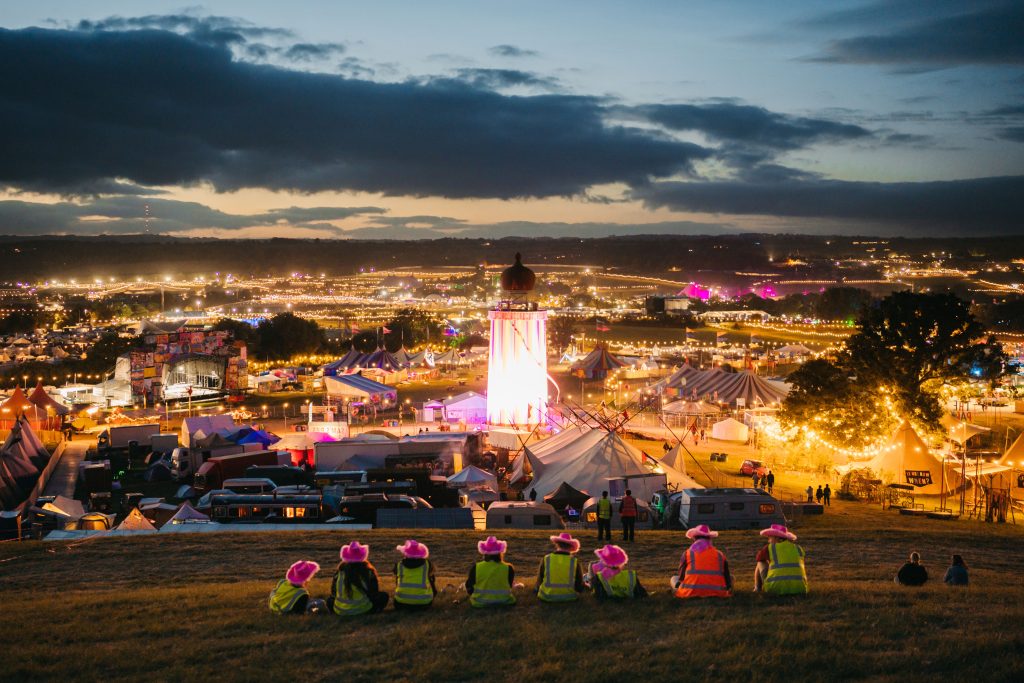
And sitting here, surrounded by music fans, I have found myself thinking about the similarities between sport and music.
I am a simple man — Simple Simon, some might say — and I know life is not completely black and white. But I do think many of us, growing up, get pulled naturally towards either sport or the arts. I was firmly pulled towards sport.
At school, if I had spare time, I used it playing something. Any sport would do. Give me a ball, a racket, a pitch, a court, a wall, a net, or even just a competitive challenge, and I was happy.
Others were pulled towards music, painting, drama, dance, or performance. They found their
joy in rhythm, colour, sound and expression. I was not one of those people.
I am famously unmusical within my family. I passed all my academic exams, but failed the one music exam I took miserably. If you have never seen me at Racketlon karaoke, there is a reason. The only song I can confidently sing from start to finish is the happy birthday song – and even then, I prefer it when everyone else joins in loudly enough to cover the damage.
So perhaps I am not the obvious person to compare music and sport. But I am going to do it anyway.
The Racketlon World Championships and the Isle of Wight Festival are both annual gatherings. One celebrates music. The other celebrates multi-sport racket endurance, skill, stubbornness and mild physical suffering. Both bring people together from different places. Both require travel, planning, tickets, accommodation, camping, scheduling, food, drink, weather management and comfortable shoes.
At the music festival, people study the line-up and plan which bands they want to see. At the Racketlon World Championships, players study the draw and wonder which opponent will ruin their weekend first.
Music festivals probably have the advantage when it comes to names. Their line-up includes people called Sting, Faithless and Razorlight. Our draw includes people called Leon Griffiths, Nicolas Lenggenhager and Keith Lesser. No disrespect to any of them, but “Sting” sounds like a world champion. ‘Leon Griffiths’ sounds like a very pleasant accountant. (Sorry, Keith.) The inconvenience for the rest of us is that Leon is considerably more dangerous (with a racket in hand).
At the Isle of Wight Festival, there are stages: the main stage, the big top, smaller stages, hidden stages, and places where you suddenly hear a band you have never heard of but somehow end up enjoying.
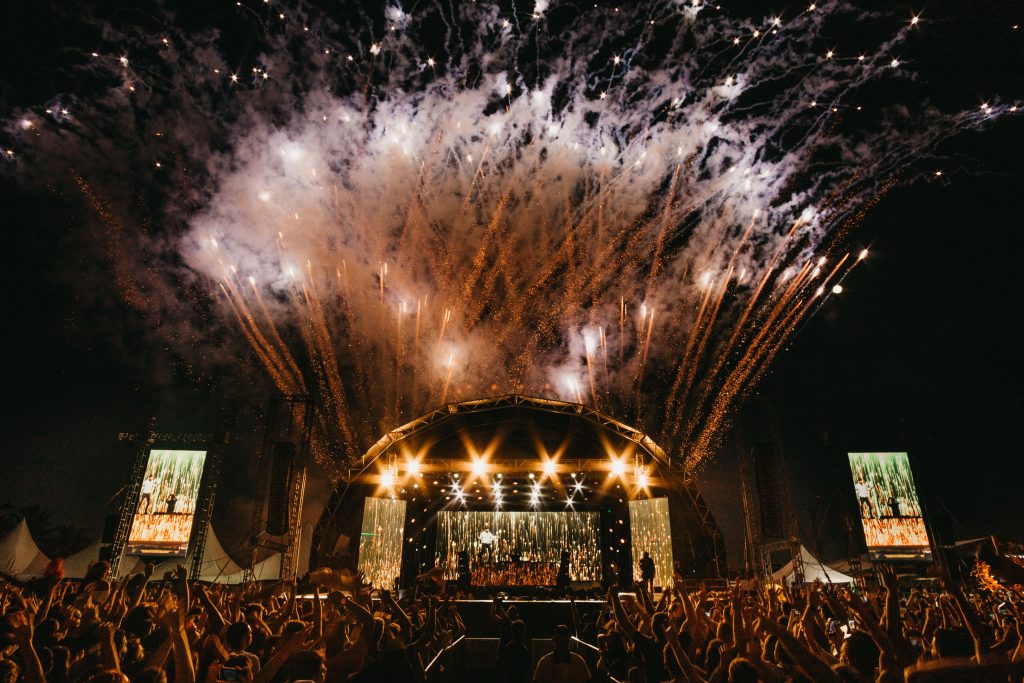
At the Racketlon World Championships, we have stages too. We just call them courts. Centre court. Court one. Court two. Show courts. Outside courts. Practice courts. The places where dreams are made, rankings are defended, egos are bruised, and someone is always trying to find their water bottle.
At both festivals, the best performers in the world gather to show their craft. At Isle of Wight, we watch musicians who have spent decades learning timing, control, rhythm, feel and presence. At the Racketlon World Championships, we watch players who have spent decades learning touch, movement, tactics, discipline, resilience and the slightly unnatural ability to switch from table tennis to badminton to squash to tennis without forgetting which grip they are supposed to be using.
At both events, the elite make impossibly difficult things look easy. A guitarist makes a solo look effortless. A racketlon player makes four sports look effortless. Trust me, neither is.
A Racketlon player glides through a badminton rally, kills a squash ball into the nick, then somehow still has the legs to serve properly in tennis.
The audience sees the performance. What we do not see are the years behind it.
The lonely practice.
The repetitions.
The failures.
The technical rebuilds.
The missed notes.
The missed shots.
The injuries.
The doubts.
The days when nothing flows.
The days when everything feels heavy.
Both music and sport are built away from the public eye. The festival is not where the work happens. The festival is where the work is revealed. And that is one of the great similarities. Both musician and athlete are trying to reach the same magical state: flow.
That moment when thought disappears. When the body knows. When timing sharpens. When movement and instinct become one. When creativity appears without being forced. When the guitarist stops thinking about the next chord and simply plays. When the Racketlon player stops worrying about the score and simply competes.
Both are chasing a peak performance at exactly the moment when it matters most. And both know the terror of getting it wrong. A musician does not want to miss the note, forget the lyric, lose the rhythm, or come in at the
wrong time.
A Racketlon player does not want to frame the smash, miss the serve, choose the wrong shot, tighten up at 19-all, or suddenly forget how to play table tennis despite having played it for years. Rehearsal helps. Training helps. Experience helps.
But the truth is the same in both worlds: nobody knows exactly what will happen until the moment arrives. You can practise the song a hundred times. You can train the backhand a thousand times.
But live performance has a life of its own.
The lights go on.
The crowd gathers.
The score starts.
The first note sounds.
The first serve is struck.
And then you find out.
There are similarities in the crowd too. At a music festival, people want to be close to the stage. They want the best view, the best sound, the feeling of being near the action.
At Racketlon, we want the same. We gather courtside, lean on barriers, perch on benches, stand behind glass, whisper tactical observations, pretend we are not nervous for our friends, and occasionally offer advice that is completely ignored.
At the Isle of Wight, if you arrive early enough, you might get near the front. At Racketlon, if you arrive early enough, you can often sit courtside and watch world-class players from just a few metres away — without being crushed, dehydrated, or forced to stand behind someone wearing a large hat.
And then there is access to the stars. At a music festival, the performers are usually separate. They arrive backstage, perform on stage, disappear backstage, and unless you have a VIP pass, a media pass, or an extremely
convincing clipboard, that is probably as close as you get.
Racketlon is different. At Racketlon, the stars walk among us.
They queue for food.
They carry rackets.
They sit on the same benches.
They warm up beside you.
They watch matches.
They lose socks.
They look tired.
They talk to juniors, veterans, newcomers, and opponents.
You may watch one of the best players in the world on centre court in the morning, then
stand next to them later while they are checking the Teams schedule and wondering whether
they have enough time for lunch. That is one of the beautiful things about Racketlon. The distance between the world-class, the good, and the ordinary is unusually small.
And sometimes, as ordinary players, we even get to step onto the main stage ourselves. At the World Championships, you may find yourself playing on centre court. You may find your match streamed, watched, scored and remembered. You may, for a few brief moments, experience what it feels like to perform on the big stage.
Try doing that at the Isle of Wight Festival. Unless you can outsmart the security guards, sprint onto the main stage, grab a drumstick and hit a cymbal before being wrestled to the ground, removed from the venue and
remembered for all the wrong reasons, your chances are limited.
So yes, music festivals and Racketlon festivals have more in common than we might first think. Both have stages, stars, crowds, nerves, preparation, moments of beauty, people chasing flow, years of unseen work compressed into one public performance, and both are about timing, courage, skill, creativity and the hope that when the moment arrives, the best version of you arrives with it.
But then comes the difference. The harsh, brutal, wonderful difference. At a music festival, the performer walks on stage hoping everything comes together.
At the Racketlon World Championships, the performer walks on court knowing someone else is standing opposite them with one clear aim: To make sure it doesn’t.
That is competitive sport. You are not simply trying to play well. You are trying to play well while another human being uses all their skill, fitness, intelligence, experience and stubbornness to disrupt you. They are trying to rush you, move you, trick you, tire you, expose you, pressure you, break your rhythm, steal your confidence, take your time away, and find the weakness you hoped they would not notice.
Imagine that at a music festival. Imagine the headline act walking on stage, opening with a crowd-pleasing anthem, and just as the chorus begins, another band storms on from the side and tries to disrupt the rhythm. The drummer changes the tempo. The guitarist plays over the solo. Someone moves the microphone.
The bassist starts pulling the song in a different key. The singer tries to hold it all together while another singer deliberately sings the wrong line half a beat early.
That would not be a concert. That would be chaos…or possibly jazz.
And that is where sport and music finally separate. In music, the other performers usually help create the performance. In sport, the other performer tries to destroy it. That is what makes Racketlon so hard. And that is what makes it so beautiful.
You are not judged only by what you can do in practice. You are judged by what survives
under interference.
Can your table tennis survive pressure?
Can your badminton survive fatigue?
Can your squash survive oxygen debt?
Can your tennis survive the accumulated damage of the previous three sports?
Can your mind survive the scoreboard?
Can your technique survive another player trying to dismantle it?
That is the World Championships. Not just a festival of racket sports. A festival of disruption. A festival of problem-solving.
A festival where preparation meets resistance. A festival where flow is not gently invited, but fought for.
So as I sit here in my red camper van at the Isle of Wight Festival, listening to musicians prepare for their stages, I find myself thinking of Rotterdam…
The courts.
The players.
The nerves.
The friendships.
The battles.
The exhaustion.
The flow.
The disruption.
And the strange privilege of being part of a sport where ordinary players can stand close to greatness, sometimes share the same stage, and occasionally — if the draw is unkind enough — be dismantled by it.
Music festivals celebrate performance. Racketlon celebrates performance under attack. And that, perhaps, is why I love it.
Follow the Singles at the FIR Racketlon World Championships 2026 here and the Teams here.